HarmonyOS Atomic Service Smart Cultural Tourism Platform

Leveraging HarmonyOS atomic service capabilities, build a smart cultural tourism service system covering the entire chain of dining, accommodation, transport, sightseeing, shopping, and entertainment.

Functional Overview

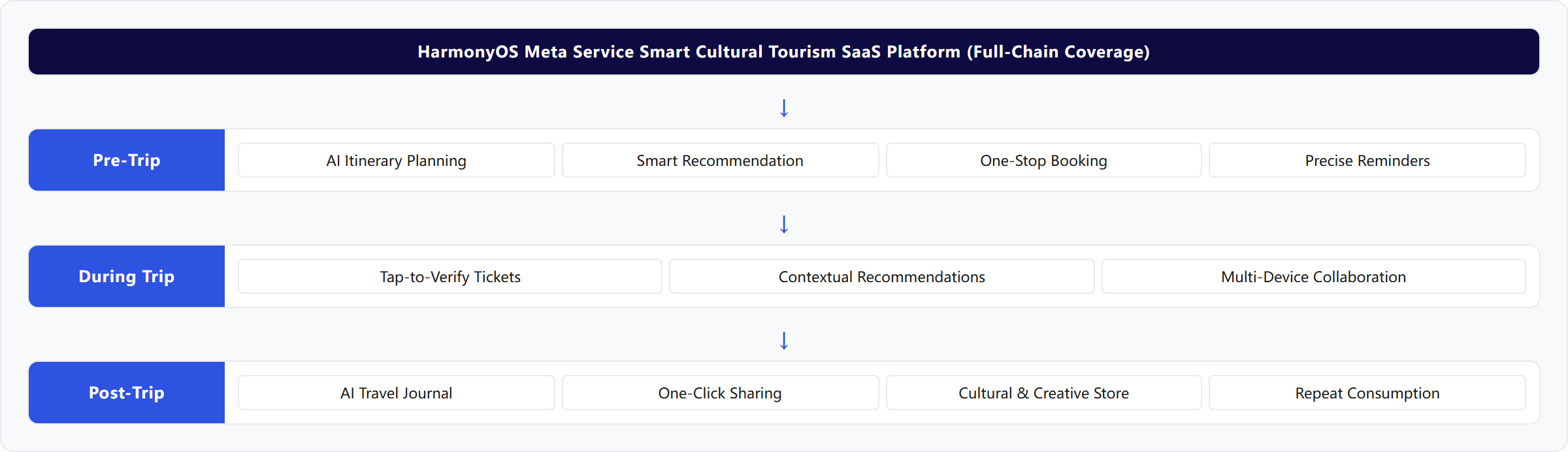
Leveraging the "no download, tap-to-use" feature of HarmonyOS atomic services and combining AI large-model capabilities, we build a smart service system covering the entire "dining, accommodation, transport, sightseeing, shopping, and entertainment" chain, providing travelers with an end-to-end intelligent experience from trip planning to post-trip sharing.

Customer Pain Points

  • High APP acquisition cost: Visitors are reluctant to download scenic-area apps, user acquisition is costly, and reach efficiency is low.
  • Services disconnected from demand: Scenic-area services and marketing cannot push precisely based on visitors’ real-time location and intent, resulting in low conversion.
  • Fragmented cross-device experience: Services cannot flow between phones, watches, tablets, and other devices, leading to a disjointed experience.
  • Long traffic conversion path: Visitors must go through multiple page jumps from browsing to purchase, causing heavy conversion-funnel loss.

Solution Advantages

  • Multi-entry reach: Relying on HarmonyOS atomic service features, visitors can quickly access services through multiple entries such as desktop service widgets and Xiaoyi voice.
  • AI smart itinerary planning: Based on self-developed optimization algorithms powered by large models, it analyzes visitor preferences, real-time passenger flow, and weather data to automatically generate personalized itineraries.
  • Context-aware intelligent recommendations: Through geo-fencing and intent sensing, it pushes real-time information on tours, dining, and featured activities, and supports seamless service flow to watches, tablets, and other terminals.
  • Data-driven conversion: Through visitor behavior analysis, it helps scenic areas dynamically adjust service strategies to achieve precise supply-demand matching.

Architecture Diagram
Architecture Diagram